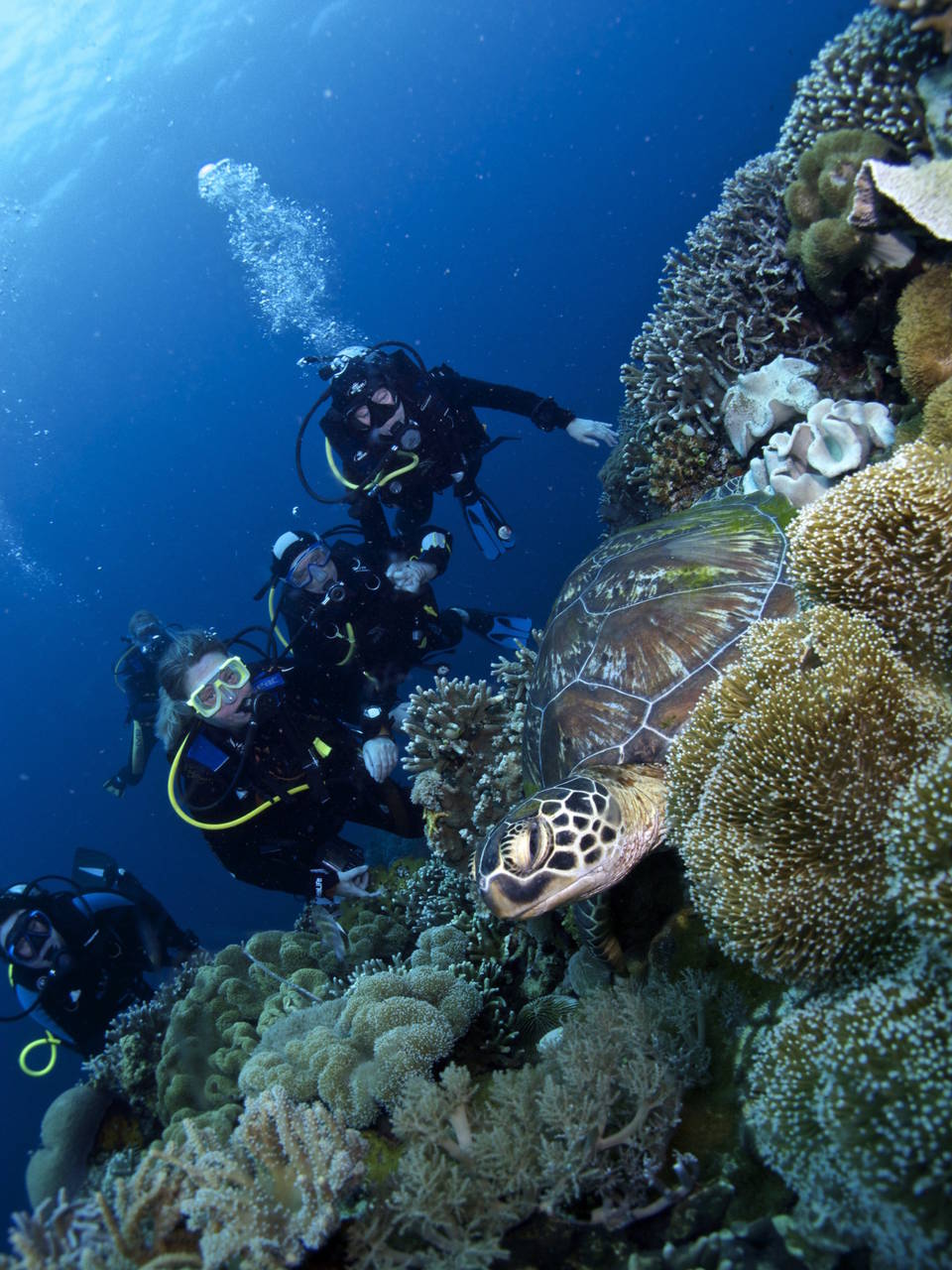

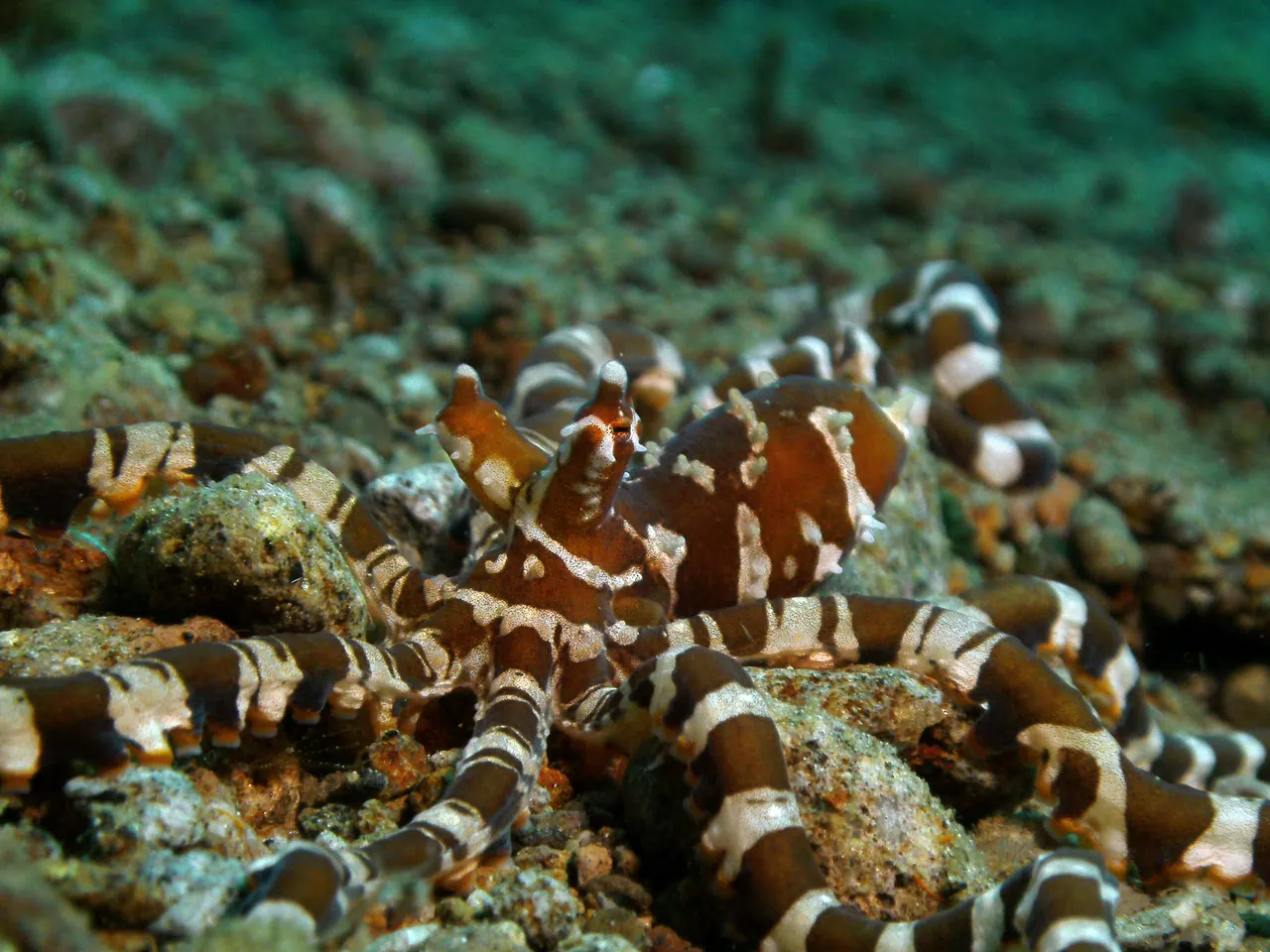
Famous for their incredible intelligence, intriguing behaviours, and almost unbelievable ability to disappear into their surroundings.
And the best part? You don't need to venture far offshore to find them. You just need one of our experienced guides, a little patience and maybe your camera.
In October and November especially, water temperatures are usually about 29°C. There’s also less heavy rain than in earlier months. This change can boost underwater visibility, especially during sunrise and dusk dives.
Of course, marine-life sightings are never guaranteed. That's part of the magic of muck diving in Dauin — every dive is different, and you never quite know what might be waiting in the sand.
The Cephalopods to Look Out for: Blue-Ringed Octopus — Iconic, Small, Beautiful & Dangerous
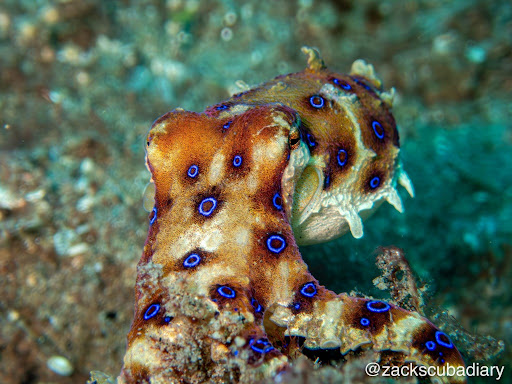
Don't let its tiny size fool you. The blue-ringed octopus (Hapalochlaena lunulata) is one of the most striking animals you can encounter while diving in Dauin.
Its body looks plain when resting. But when excited or threatened, bright blue rings shine brightly.
These vivid markings serve as a warning to potential predators. The animal carries tetrodotoxin, a powerful neurotoxin that can cause paralysis and can be fatal to humans.
That combination of incredible beauty and serious danger makes the blue-ringed octopus an unforgettable sight.
Despite its reputation, this is an animal best admired without interference. Never attempt to handle one, and always give it plenty of space.
Why it’s so special:
- Striking iridescent blue rings that flash when threatened
- Exceptional camouflage that can make it almost invisible
- Tiny size packed with remarkable intelligence and hunting skill
- A highly rewarding (and responsible) subject for macro photographers
👉 If you find one, keep a respectful distance, enjoy the moment, and never attempt to handle it. The best encounters happen when the animal feels undisturbed and shows its natural behaviour.
Mimic Octopus — Shapeshifter & Master of Disguise
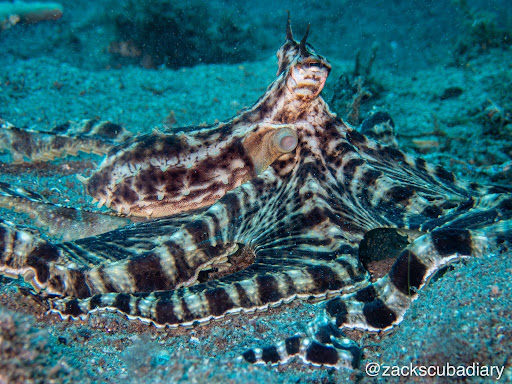
The mimic octopus (Thaumoctopus mimicus) is one of the most extraordinary animals you can encounter while muck diving in Dauin.
Unlike many octopuses that hide away, the mimic octopus often lives out in the open. With the extra risk, this octopus has evolved to actively impersonate other marine species. Remarkable “David Attenborough voice”
When threatened, this smart cephalopod can tuck its arms and glide over the sand like a flatfish. It can also spread its arms to look like a lionfish or trail two banded arms to mimic a sea snake. Not only that, it will adapt between these depending on the level of threat it assesses or senses
These talents are used for attack as well as defence. As skilled hunters, they use their tricky looks and movements to sneak up on crabs, gobies, and other small prey.
Why it's so special:
- Remarkable mimicry of other marine animals
- Incredible control over body shape and movement
- Exceptional intelligence and problem-solving abilities
- A fantastic subject for underwater photographers
👉 If you encounter one, slow down and watch carefully. The real magic is seeing how its behaviour changes from one moment to the next.
Algae Octopus — A Macro Photographer's Dream
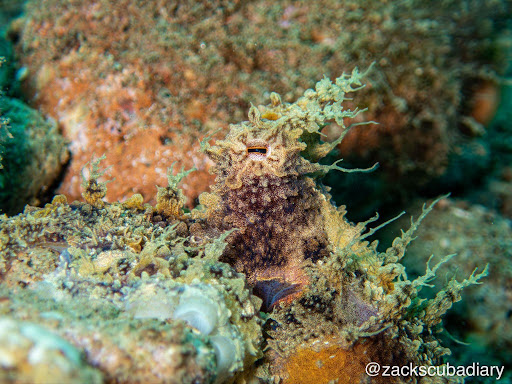
The algae octopus (Abdopus aculeatus) is another fantastic cephalopod to look out for in Dauin.
This small, long-armed species is a master of disguise. In its usual resting disguise, it shows mottled ochre, grey, and brown. This makes it resemble a gastropod shell covered in algae, with dark bands along the arms. The effect is so strong that the octopus can almost vanish against the volcanic sand, rubble, and scattered algae on Dauin’s slopes.
What makes this rewarding for underwater photographers is its delicate form and shifting texture. Its interesting behaviour adds to the appeal. This octopus is one of the few that can walk bipedally. It rears up on two arms while curling the other six into a shape like drifting algae. These movements, along with the ability to raise and lower skin papillae, add texture. This creates endless opportunities for unique compositions.
The algae octopus is around all year, but it stands out more from September to December. This is the cephalopod season when many are foraging on the open sand and looking for potential mates. Spotting one—and then watching it transform as it settles or walks away—is often just as exciting as capturing the perfect frame.
Why look for them?
- Masterful algae-like camouflage in mottled ochre, grey and brown
- Unusual bipedal walking and delicate, long arms
- Excellent macro photography opportunities
- A fascinating species whose texture and movement constantly change
👉 Keep your eyes on the sand and rubble. Sometimes the most incredible creatures are hiding in plain sight.
Wunderpus Octopus — Striking, Elusive & A Photographer's Dream
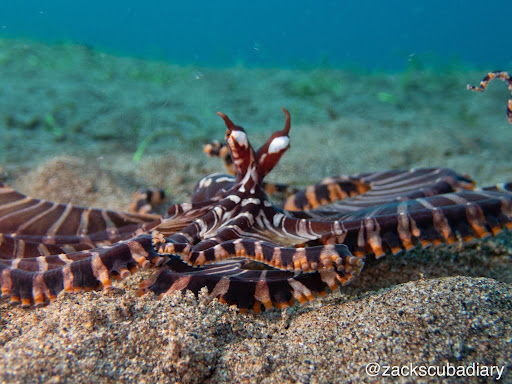
The wunderpus octopus (Wunderpus photogenicus) stands out among cephalopods in Dauin. You can easily recognise it by its delicate arms and stunning brown-and-white patterns.
Unlike many octopuses that blend into their surroundings, the wunderpus stands out. Its striking pattern makes it a fascinating subject for underwater photographers. However, spotting one against Dauin's black volcanic sand can still be a challenge.
Often mistaken for the mimic octopus, the wunderpus has a unique look and behaviour. Its slender arms, unique markings, and odd movements make it a fascinating animal to watch as it searches the seabed for prey.
For macro photographers and critter enthusiasts, encountering a wunderpus is a real highlight. Its unique patterns and graceful movements create many chances for stunning underwater photos.
Keep an eye out on your next muck dive. Spotting this beautifully patterned hunter is always rewarding!
Why they’re worth looking for:
- Distinctive brown-and-white markings and slender arms
- Fascinating camouflage and hunting behaviours
- An unusual species often confused with the mimic octopus
- A fantastic subject for macro photography
👉 Keep an eye on the black volcanic sand. Spotting a wunderpus is a great find. It's even better when you see it move naturally in its home.
Coconut Octopus — Clever, Resourceful & A Master of Improvisation
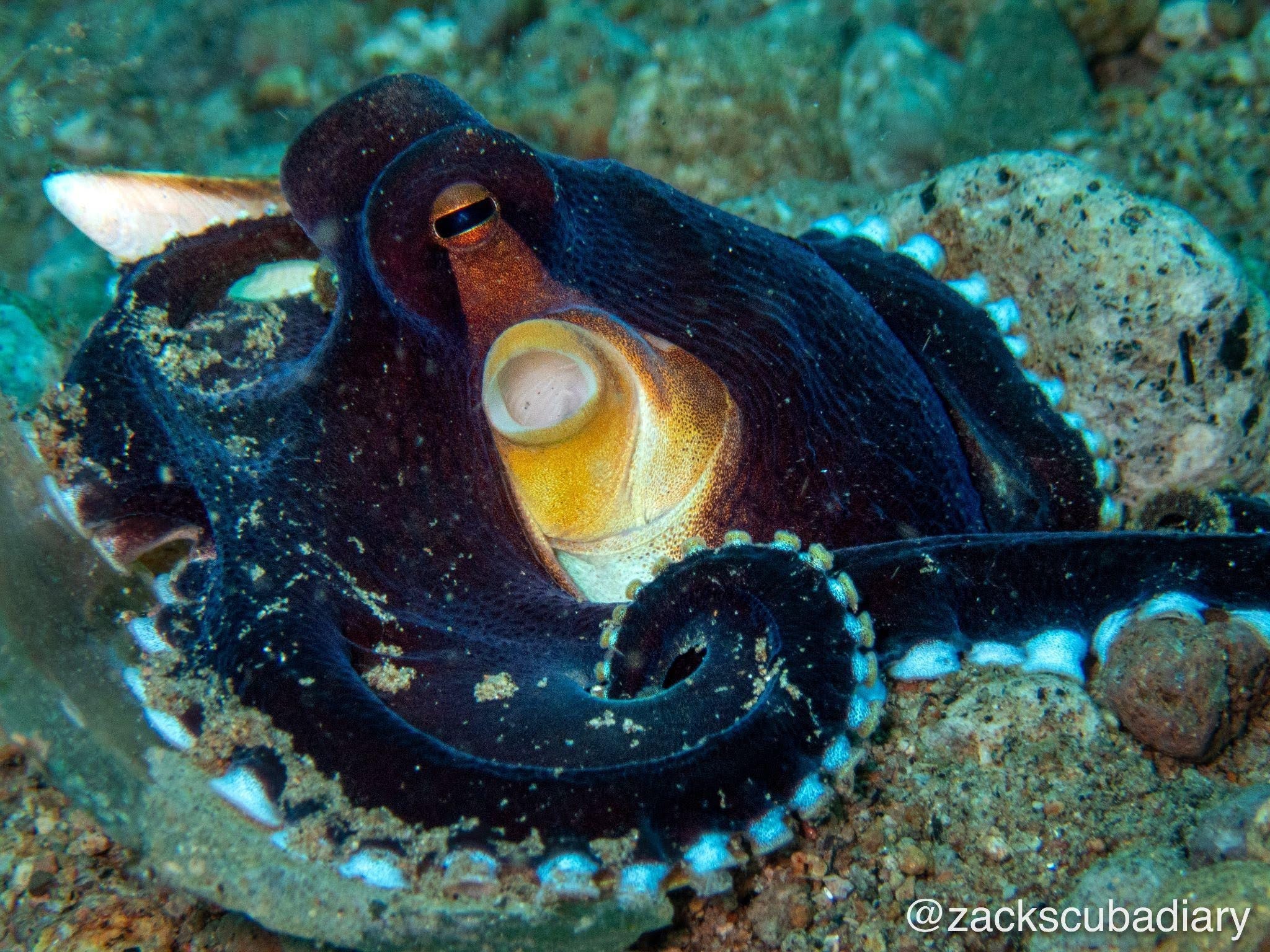
The coconut octopus (Amphioctopus marginatus) is a fascinating creature you can spot while muck diving in Dauin. It stands out for its intelligence, curious behaviour, and unique use of objects for shelter.
The coconut octopus is different from many other octopuses. While they hide in natural crevices, the coconut octopus collects discarded coconut shells, clam shells, and other items. It uses these to make portable shelters. It can even carry these materials across the seabed, ready to use them when danger approaches.
But its resourcefulness doesn't stop there. This little cephalopod is an active hunter, searching the sand and rubble for crabs, shrimp, and other small prey. Watching it explore its surroundings with its flexible arms is a fantastic reminder of just how clever octopuses can be.
The coconut octopus is fascinating for divers and marine-life lovers. Its mix of camouflage, problem-solving, and tool use sets it apart.
Why they're worth looking for:
- Remarkable use of shells and other objects as shelter
- Intelligent and curious behaviour
- Excellent camouflage against sand and rubble
- Fascinating hunting and problem-solving techniques
👉 Keep an eye out for an octopus carrying a shell across the seabed — you could be watching one of the ocean's most resourceful little creatures in action!
Why Are Cephalopods So Intelligent?
Cephalopods are sometimes described as the primates of the sea, and for good reason.
Octopuses, cuttlefish, and squids display an extraordinary range of behaviours for invertebrates. Their intelligence, adaptability, and skill in interacting with their environment amaze both scientists and divers.
Here are just a few of the things that make them so remarkable:
- Camouflage in seconds: Specialised skin cells help them change colour and blend into their surroundings.
- Use tools: Some octopuses use shells and other objects for protection or shelter.
- Learn and remember: Research has demonstrated impressive learning and problem-solving abilities in several cephalopod species.
- Change texture and posture: They can alter their appearance to resemble their surroundings or, in the mimic octopus's case, other animals.
An octopus has a unique nervous system. Many of its neurons are found outside the central brain, especially in its arms. This adds to the amazing sensory and motor skills that make octopuses such interesting animals to watch.
Many cephalopods have short lifespans, usually one to two years for octopuses, depending on the species.
They have a remarkably short time to grow, learn, hunt, reproduce, and navigate their environment.
The more you learn about cephalopods, the more extraordinary they become. And seeing one behaving naturally in its own environment makes all that knowledge feel even more real.
Tips for Photographing Cephalopods in Dauin
For underwater photographers, October offers plenty of reasons to spend a little extra time searching the black volcanic sand.
But photographing cephalopods isn't just about having the right camera. It's also about patience, observation, and understanding the animal in front of you.
A few simple tips can make a big difference:
- Slow down: Many species are masters of camouflage, so scan the sand and rubble carefully.
- Watch before shooting: Observing an animal's behaviour can help you anticipate interesting movements and interactions.
- Use lighting carefully: Avoid excessive light or repeated disturbance, especially when photographing sensitive animals.
- Keep your distance: Never touch, chase, corner, or handle a cephalopod for a photograph.
- Listen to your dive guide: Local knowledge can make all the difference when searching for elusive species.
Remember, the goal isn't simply to get the photograph. It's to witness the animal behaving naturally and leave it undisturbed.