

Stepping into the IDC as a Divemaster is exciting—and a little intimidating. Suddenly, you’re not just guiding or assisting; you’re teaching, leading, and keeping students safe. The shift from a Divemaster mindset to an instructor mindset can be subtle, but it’s critical.
Most candidates make small mistakes early on simply because they haven’t yet realized that teaching scuba requires its own skill set.
Recognizing this early can accelerate your growth, build confidence, and make the IDC experience more effective and enjoyable. Over the years, I’ve noticed some consistent patterns in how Divemasters transition into instructors—and the areas where most candidates stumble.
In this blog, I’m going to break down nine common mistakes IDC candidates make, along with some practical advice for making the transition from Divemaster to scuba instructor smoother.
Mistake #1 – Treating Students Like Divers to Guide
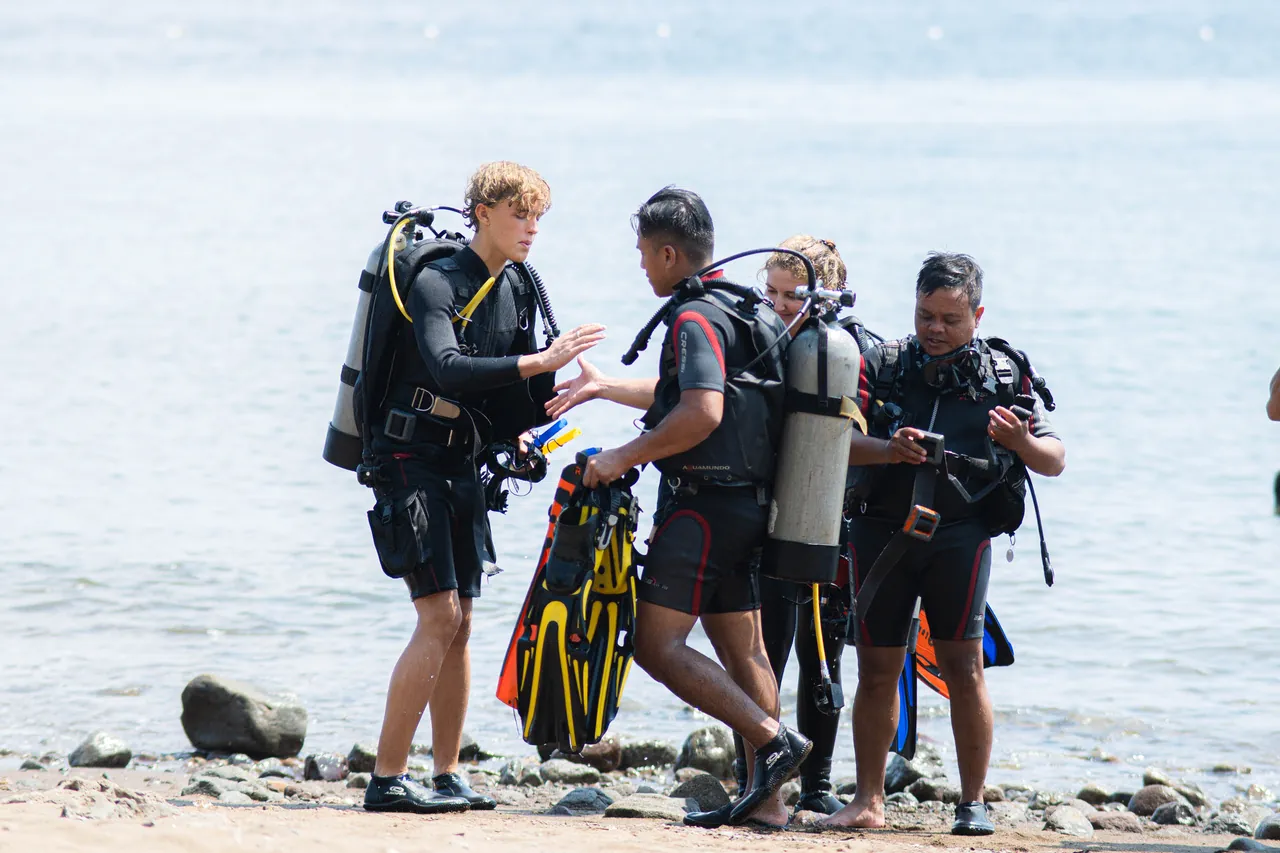
A common early mistake is continuing to behave like a Divemaster rather than an instructor.
Candidates might turn their back on students to point out fish, focus on showing them something cool, or simply rely on habits they developed while leading certified divers. While this is natural, it can leave students feeling unsupported or unsafe.
As an instructor, you need to lead, observe, and guide learning simultaneously. That means planning lessons, scanning the group, monitoring student performance, and managing the dive—all while helping your students develop their own skills.
I once had a candidate who had just finished their IDC. We were on the boat for some specialty training, and they were “in charge” of the dives. It was basically a day of fun diving, with some skills and a chance to relax, but I wanted to see them put everything they had learned to the test.
The dives were going great. Between dives, however, they had an equipment issue. Almost immediately, they brought the faulty equipment to me to fix.
Of course, I was happy to help, but something on my face must have given me away. I wasn’t upset—probably just a little disappointed.
Several years later, the same instructor told me about that incident. Honestly, I didn’t even remember it, but they said it was the moment they realized: that was their problem to fix.
They were in charge. Problems that occurred were theirs to solve rather than something to immediately hand off to someone else.
The buck stops with the instructor.
I hear new instructors giving very basic communication for gas checks (“Tell me when you reach half a tank”), dive profiles (“tell me three minutes before deco”), navigation, and direction of the dive (“Follow me”), and then spending the whole dive looking for critters and cool things to show the divers.
That is the wrong mindset for a dive instructor.
As a dive instructor, you mostly end up being a terrible dive guide.
Dive guides are there to find all the “good stuff” for people to take pictures of and marvel at. As an instructor, I simply don’t have the time to scan every inch of the reef. I’m supervising my students, meeting performance requirements, managing the dive, and helping them learn.
Of course, if I find something nice, I’ll point it out. But my priority is my students—not finding the next nudibranch.
It takes a subtle but important mental shift to go from Divemaster to instructor
Mistake #2 – Overloading Students with Information
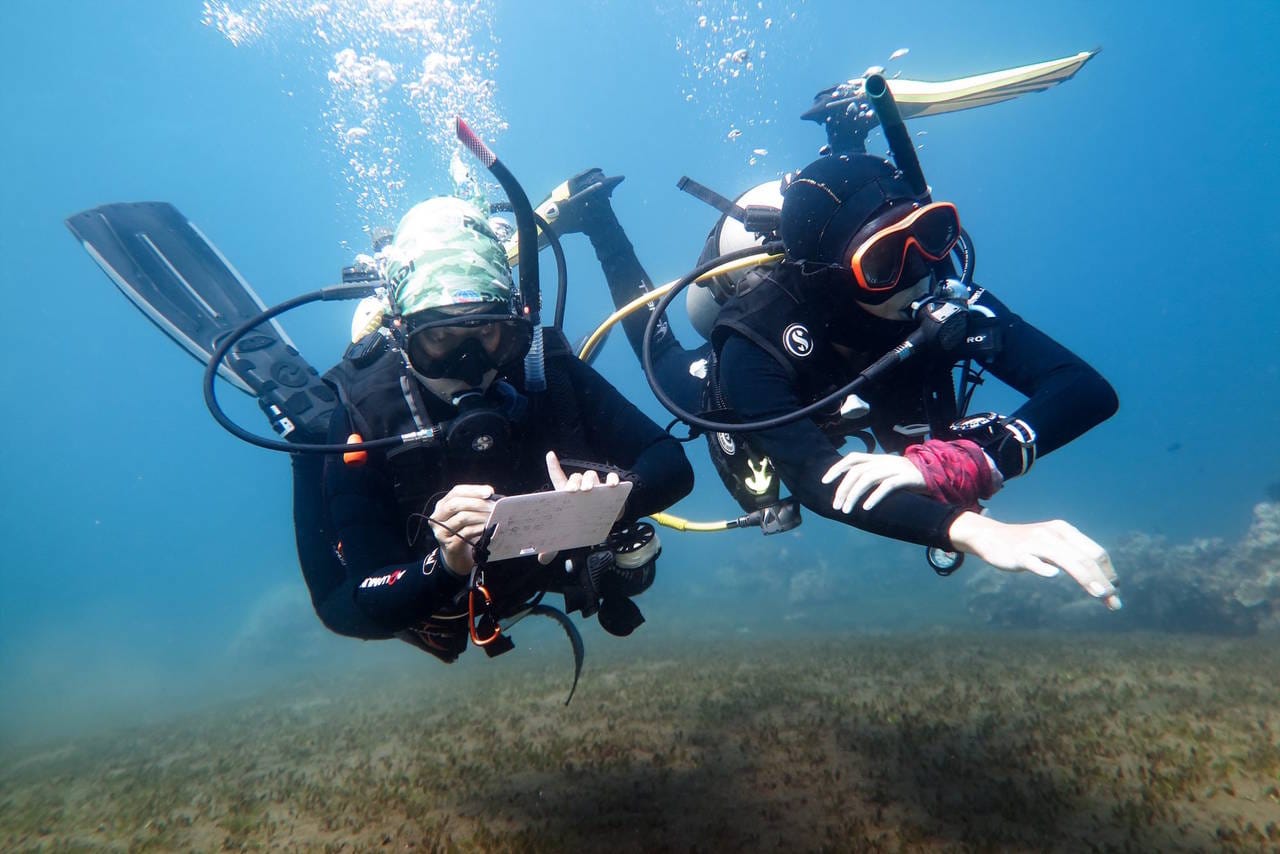
New instructors often assume that more information equals better teaching. They cram presentations with every detail they know about dive theory, equipment, and safety.
Students quickly become overwhelmed.
Effective teaching is about clarity, pacing, and relevance. Focus on the essentials first. Let students absorb one skill before moving on to the next.
I’ve had candidates give twenty-minute briefings on a single skill.
I’m looking at you, CESA.
Giving someone too much information can actually have the opposite effect from what you intended. Short, clear, concise information is usually more effective than an encyclopedic explanation.
Let people actually try the skill in the water. Then provide additional communication when you need to solve a problem.
It saves time and gives students more opportunity to learn by doing.
The same principle applies in the classroom.
I once had a candidate who mastered the art of short classroom presentations. By the end of their IDC, they were scoring 5 out of 5 for their presentations while keeping them under five minutes. One was actually only a little over three minutes.
Meanwhile, other candidates were droning on for fifteen minutes and barely managing a passing score.
More teaching does not necessarily mean more talking.
One of the most important skills you can develop during your IDC is learning what information your students actually need—and what can wait.
Mistake #3 – Forgetting That Students Get Nervous
It’s easy to get caught up in demonstrating skills and forget that the person in front of you might be nervous.
Empathy is just as important as technical knowledge.
As instructors, we control the learning environment. Adjusting the pace, repeating a step, changing the activity, or even taking a short break to let someone relax underwater can dramatically improve the learning experience.
One of the best tips I can give new instructors is to keep a few skills in your “back pocket.”
What I mean by this is to save some of the easier skills in a session for a possible problem situation.
If someone is struggling with a mask skill—imagine, haha—don’t just make them practice it repeatedly. They might have already inhaled half the pool through their nose.
Give them something else to do.
Change gears and shift the focus elsewhere. Do something like cramp removal or another skill that isn’t as intimidating.
People get nervous and anxious all the time.
The same thing happens in open water. Maybe instead of jumping straight into a skill, you spend a few minutes looking at fish or stay shallow while the student gets comfortable.
If you learn to slow down and read your students, you’ll find that your training sessions become much smoother.
It’s easy to focus on what you have to do as the instructor, but training is actually all about the student—not you.
Put yourself in their shoes—or fins—and learn to empathize with them.

Mistake #4 – Overthinking Presentations
Many candidates overprepare and aim for perfection in front of assessors. Ironically, this can make them appear stiff or robotic.
The candidates who succeed focus on clear, understandable teaching, not flawless delivery.
Relaxing and simplifying your explanations helps students learn and makes you a more confident instructor.
I touched on this in Mistake #2, but it’s worth digging into.
During the IDC, you are given tools to help you prepare presentations. Your presentation cue cards, presentation outlines, and other preparation tools are there so you can get used to the system.
The aim is to become familiar enough with the system that eventually you don’t really need those tools.
Think about it.
If a student comes to you and asks a question from their course materials, what are you going to do?
Probably think for a second and then answer their question.
You’re not going to tell them that you need the evening to prepare a presentation to help them understand it and that you’ll explain it tomorrow morning.
During the IDC, we give you ample time to prepare presentations because the system is new. But sometimes this leads candidates to arrive with page after page of notes to answer a single question.
The sooner candidates learn to prepare presentations the way they would in the real world, rather than in some imaginary “IDC World,” the easier it becomes—and the better they generally perform.
Mistake #5 – Poor Buoyancy During Skill Demonstrations
Demonstrating skills with poor buoyancy can make simple techniques confusing and unrealistic. Neutral buoyancy shows confidence and control, and students naturally look to their instructor as a model for how to dive.
Some candidates still arrive with the old “planted pot” mindset.
There was a time when we used what was essentially a planted-on-the-bottom technique in diver training. Assistants were there to push students to the floor and keep them there.
That approach is outdated.
We don’t want divers to learn that being excessively negatively buoyant is the norm. Your students will emulate you, so you need to be a good example.
Demonstrating skills while neutrally buoyant should be your default setting.
It doesn’t have to be a perfect helicopter hover. Your students are going to struggle to copy that anyway. A gentle fin pivot can be perfectly effective.
If you start your very first confined-water session by being neutral, you will quickly see which students are naturals and which ones might need a little more time.
Check their body position.
By Confined Water Dive 2, when you introduce the first formal neutral buoyancy skill, some of your quicker students may already be doing it naturally.
If a student’s first impression is that divers kneel on the bottom, it can be very difficult to shake that first impression.
Lead by example all the time. Learn to demonstrate most skills while neutral.
Mistake #6 – Talking Too Much During Briefings
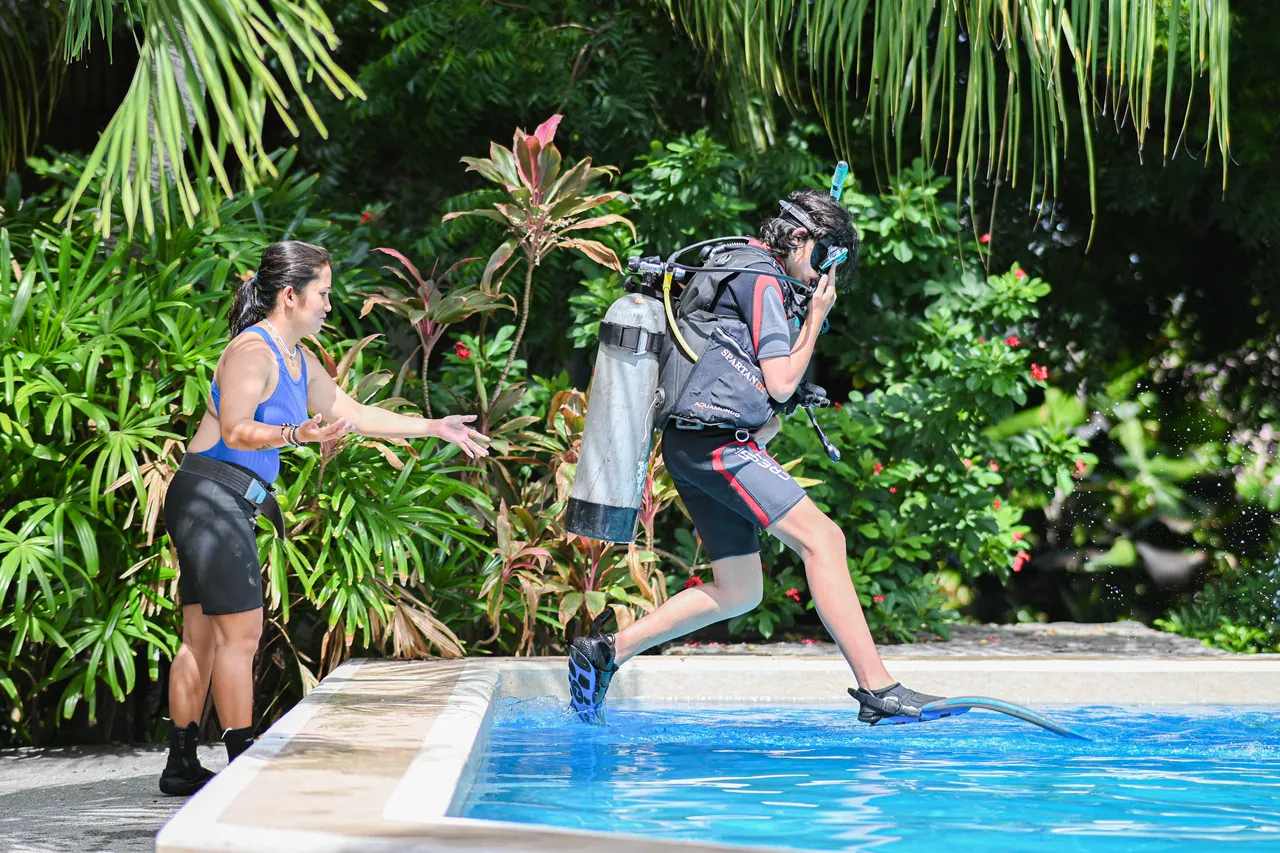
Briefings are essential, but long-winded explanations can overwhelm students.
A good briefing should cover what students need to know and then get out of the way so they can actually practice.
A simple structure is:
- Purpose of the skill
- Why it’s important
- Step-by-step instructions
- Hand signals
- Practice organization
And then get in the water.
Briefings should be one thing before anything else:
Brief.
Yes, you need to provide information and direction. Cover what is needed and move on.
Your student divers have already gone through their materials. You have already covered the information in class. There may have even been a knowledge review, quiz, or exam on it.
Your job at this point is to tell them what they need to know to apply the skill in the confined-water session or open water dive.
Then spend more time actually doing it rather than talking about it.
The goal isn’t to see how much information you can fit into a briefing. The goal is to give students enough information to perform safely and successfully.
Mistake #7 – Worrying About the IE Too Early
Many candidates start stressing about the Instructor Examination before they have fully engaged with the IDC.
This can actually hinder their performance.
Focus on learning today, not passing an exam next week.
The IE is an important checkpoint, but the IDC is where you develop the skills you need to become an instructor. Confidence comes from practice and competence—not from constantly worrying about the test.
Have you ever been on a long car ride with a child?
You can probably expect to hear the question:
“Are we there yet?”
More than a few times.
It’s the same with the IDC.
Candidates who are hyper-focused on the IE and constantly asking, “So, in the IE…?” can lose focus on where they actually are in their training.
Focus on the IDC.
The IE will come whether you worry about it or not.
Our job as Course Directors is to prepare you for the IE. Let us worry about that.
Your job is to become a better instructor.
Mistake #8 – Forgetting That Teaching Is a Skill
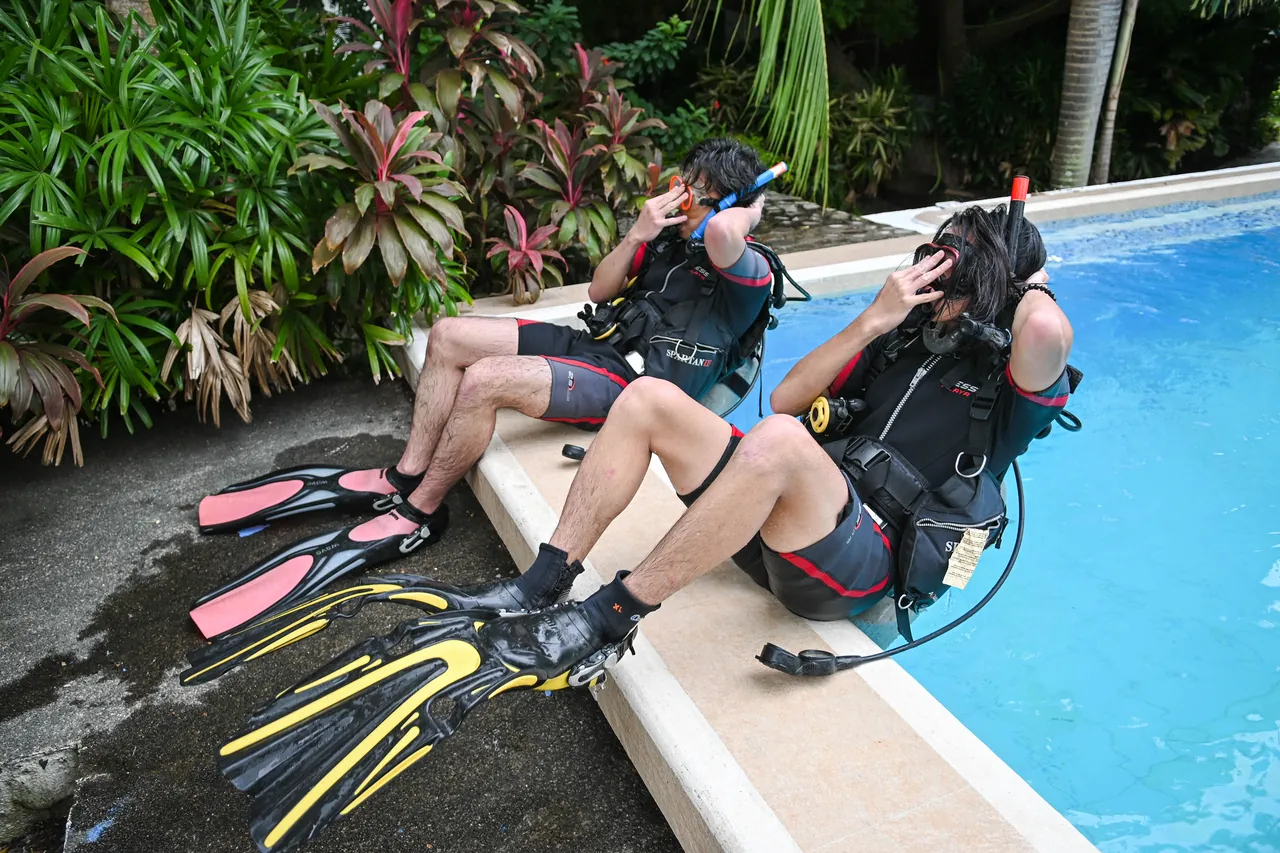
Being a great diver doesn’t automatically make you a great instructor.
Teaching requires practice, feedback, and reflection.
IDC candidates spend a lot of their time refining teaching techniques, planning lessons, and learning how to apply the PADI System—not simply practicing dives.
Endless hours in the pool practicing the skill circuit have never made a great instructor. Of course, you need a basic level of diving skill and knowledge, but that is just the starting point.
To become a great instructor, you need to work on your teaching skills.
Being able to adapt the PADI System to fit your students’ needs requires putting everything together. Organizing training sessions, ensuring safety, meeting standards, managing different student abilities, and keeping sessions on track is an art.
And like any other skill, it takes practice.
When you finish your IDC and IE, you will be an entry-level instructor.
That’s when you can really get down to the business of honing your teaching skills.
The IDC doesn’t magically turn you into the finished product.
It gives you the foundation to keep developing.
Mistake #9 – Not Recognizing How Much You’re Growing
Many candidates underestimate how much they improve during an IDC.
Skills that seemed impossible at the beginning can become second nature by the end. Recognizing that progress can boost confidence—not just for the IE, but for those first courses you teach afterward.
During final counseling sessions, there is a trend that always makes me laugh.
Whenever we review a candidate’s presentation scores, they inevitably stare at the page and point out the “one” score they received at some point during the two weeks.
“Yes, but look at this one!”
Yes.
That was a low point.
But it was probably also where you learned the most.
Presentations in the IDC build from simple to complex. By the end of the course, candidates are juggling several things at once without even realizing it.
So keep your head up during the IDC and give yourself some credit for how much you have improved.
Because I can guarantee you are a different candidate from the person who sat down for orientation.
Becoming a Confident Dive Instructor
Learning to teach scuba is full of mistakes. That’s natural.
What matters is recognizing those mistakes, applying feedback, and staying coachable.
The transition from Divemaster to instructor isn’t simply about learning more dive theory or perfecting your skill demonstrations. It’s about learning to see diving from your student’s perspective.
You need to learn how to communicate clearly, manage risk, recognize when a student is struggling, adapt your teaching, and take responsibility for the entire learning experience.
That is what the IDC is really about.
You don’t need to be perfect when you start.
You need to be willing to learn, willing to accept feedback, and willing to keep improving.
Becoming a great dive instructor isn’t about perfection. It’s about learning, improving, and helping your students become better divers.
And that process doesn’t end when you finish your IDC.
It’s just beginning.